Tuesday, November 19, 2013

Trussville

Trussville, Alabama is a small town with a family oriented atmosphere. We have sidewalks through every neighborhood and main streets. We have two main school systems: one private, the other public. We have a Walmart and a Target... and the ever so southern Piggly Wiggly.We have a movie theater. We have a mayor! There are a lot of children. Trussville has many parks. Trees line the streets. The town is open and spacious. Our businesses are family owned and operated. The small population allows visibility to see the stars. There are tons of activities: a Christmas parade, arts and crafts festivals, Dog Days, etc.. I-59 runs through town.


Tuesday, October 29, 2013

Response #4


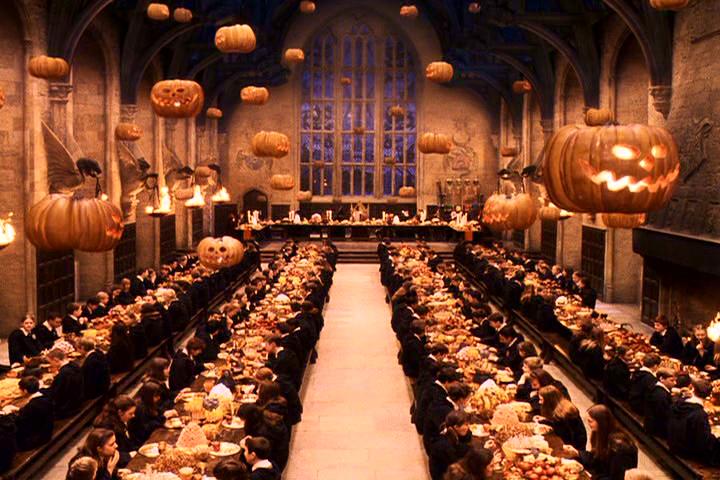
The Great Hall is the dining hall of Hogwarts School of Witchcraft and Wizardry where the students eat, socialize, do homework, receive important announcements from the Headmaster, and participate in recreational activities such as chess. The Great Hall is one of the main settings used in both of the Harry Potter books and movies. There are many signs available to the viewer in this digital image, like the pumpkins and the vast amount of people, that ultimately signify the main sign acting in this image---celebration, it’s togetherness, and spirit.
Pumpkins
            The pumpkins are the most eye-catching sign of all. First, what makes a pumpkin a pumpkin? Its vibrant orange skin is the first sign. In terms of celebration and holiday, pumpkins are mostly commonly seen around the fall holiday of Halloween, leading to the conclusion that the pumpkins are being used for decoration and that the time of year is fall. Another sign that lead the mind to conclude that the orange bulbs floating in the air are indeed pumpkins are the carved faces. No other fruit tends to have scary faces carved into it for holiday sport. So, pumpkins it is. The fact that the pumpkins have faces carved into them also aids the sign of the holiday being celebrated is Halloween. The pumpkins also have lights coming from inside of them. The lights also act as a sign and give the pumpkins’ faces life and help illuminate the room and add depth to the decorations, displaying the overall sign of celebration and its many aspects.
Students
            There are many people in this image, too many to even count. And the people themselves can act as signs to an overall bigger meaning of celebration and togetherness. The first sign to take notice of is the fact that the majority of the people in this image are dressed in the same black cloaks. A uniformity such as this can only be found in some high-end school or a flash mob. The way the people are sitting on the benches before the huge tables, is a sign that points to the idea that the people in this image are more than likely students enjoying a meal. There is also a sign of authority that supports the previous sign. Notice that the people, or students, in all black are sitting on benches that are low down, flat to the concrete floor, but there are a group of people, more than likely teachers, are places on a higher platform, both confirming the sign of students and presenting the sign of authority.
Architecture
            Upon first glance, the most noticeable thing about the architecture is that it is very reminiscent of Classical Ancient Greek architecture, with the arches, columns, and walls and floor made out of stone. This is a sign that the building and/or school itself is incredibly old with a lot of history. But the architecture itself makes it the ideal place for a Halloween party/celebration due the emotions architecture like this can evoke from the viewer. Architecture such as this evokes emotions like curiosity, fear, and the feeling of being creeped out.  Especially with the dark shadows the vaulted arches make in the room.
Other Decorations/Things
            There are many other things in the Great Hall that make up the overall sign of celebration, and the togetherness and spirit that come along with it. First, the sign of the season can be deducted from the type of light or lack of coming from the huge windows. The sky outside is painted a purple color; a sign that tells that season is indeed fall because the sun tends to set earlier in the day in that season. A sign that supports this, is the fact that the students are eating a meal, more than likely dinner, showing that it’s early enough to start a celebration, but late enough to eat dinner. There are also more signs of decoration via the dragon structures in the wall. The dragon is a mythical creature, but mythical creatures are commonly associated with a holiday like Halloween because of the scary or thrilling aspect that comes from them. Notice that the dragons are also holding buckets of fire. Fire is another sign. Fire is being used to light the pumpkins; fire is being used to warm the room via the enormous fireplace on the far right, and also used as lighting for the room. This is a sign of super old methods of light and warmth, but also a sign of setting the atmosphere for a celebration of a holiday like Halloween, the dimmer the room, the more spooky the atmosphere.
Celebration and What It All Means
            A holiday like Halloween is indeed a time for celebration. But celebration as a sign also has mini sub-signs. Togetherness is a huge part of any celebration, and is illustrated by the students and teachers coming together in the Great Hall to participate in enjoying a meal together, sharing scary stories together, and just enjoying each other’s company. Spirit is another massive aspect of the celebration. Spirit comes across in the decorations of pumpkins, dragons, the use of fire, and of course the architecture. All of which make up the overall sign of celebration. 

Sunday, October 13, 2013

Response #3

In 1612, Artemisia Gentileschi completed her painting, Judith Slaying Holofernes. The inspiration for this painting comes from an Old Testament story in the Book of Judith, in which Judith, a widow, uses her good looks to sneak into Holofernes’, an army general, tent and gets him drunk enough to pass out and then behead him. At first glance, the painting is nothing but a gruesome murder scene. With closer examination and context, it’s a great deal more than that. Judith Slaying Holofernes is composed of harsh lighting, a combination of warm and cool colors, a sense of motion, a sense of feminism, and realism, which are all agencies that play into the main message Gentileschi is trying to convey, the theme of right vs. wrong and the fine line between the two.
Lighting
Notice the lighting. There is a harsh and bright light coating half of the faces if the two women, Judith and her ladies maid. This light causes a dark shadows all around the painting, specifically on Holofernes. Gentileschi does this to symbolize that Judith and her accomplice are not bad people, but people who decided to fix things for themselves, hence them being mostly covered in in a golden-ish light, a common symbol of goodness and right. But in contrast, Judith and her aid also have these dark shadows that cover the other halves of their faces, which could mean that the act they are committing is wrong, but is for the greater good and that is why the golden light outweighs the shadows. The act of right outweighs bad connotations.
Color
Judith and her maid are dressed in cool colors (Judith) and warm colors (maid and Holofernes). Judith is depicted in gold, in biblical terms; gold is a color that represents purification and righteousness. Judith is displayed in this color because she truly believes what she is doing is right and that she is ridding the world of a horrible individual and that his death will bring more benefits than consequences. Judith’s maid is painted in a dark amber color which can represent a strong godly spirit, which Judith’s maid would probably need to be able to convince herself to aid Judith in beheading Holofernes. Holofornes is draped with a red cloth, a color that means sins or sinful actions, a fitting color for him. These colors play into the overall theme that there is a thin line between right and wrong and that it can be interpreted in many ways.
Sense of Motion/Act
There is a chaotic sense of motion portrayed in this painting. The way Holofernes hand is gripping Judith’s maid’s collar gives the audience the motion of struggle. It’s easy to imagine the fight that Holofernes is putting up, sticking against Judith’s maid, flailing his legs about, and trying to somehow stay alive. The way Judith holds the dagger conveys the motion of sawing through his flesh and bone until the head pops off. This motion supplies the emotion of anger and determination. Lastly, the audience gets a sense of the blood spurting out of his body. The blood is rendered with it flowing up out of his body and with a slight curve in the stream, making the idea of motion more prevalent
Feminism
There is a bit of irrational feministic ideals at play in this piece, specifically, the depiction of woman conquering man. It’s not about equality for Gentileschi; it’s about domination and revenge.  In her lifetime, Gentileschi was raped by a work associate of her father. While her rapist was sentenced to prison, Gentileschi lived with the aftermath for the rest of her life and that comes across in her work. She represents Holofernes as being held down and murdered by two women, two women who are standing up for something they believe in. It’s an act of revenge fueled by feminism.


Realism
Gentileschi executes her painting very realistically. The way she depicts the human body is very realistic and proportional, there is no sense of the human body being exaggerated or stretched to the point of nonrealistic. The muscles in Holofernes body are visible and accurately represented. The scene is highly plausible and could be executed with a dagger by two women undoubtedly. The blood also plays into the realism; the way it shoots out of his neck and drips down on the bed behind him is pretty truthfully. The fact that Gentileschi depicts this scene in such a way causes the viewer to think of the reality that takes place within the frame. And it aids the theme of right vs. wrong. By making it so realistic, audience members are forced to think that if such an act is capable, would they do it as well?
  
Gentileschi is using this piece to convey one message, that the line between right and wrong is very thin. Judith and her maid are in the right for fixing what they saw was wrong in their world, for taking matters into their own hands. But taking revenge in such a way could be seen as wrong. The piece offers a bit of perspective. The idea of wrong and right lies in the minds of the viewer. And Gentileschi uses these subthemes to help express this message. Her message is being communicated first through painting, but more so through Judith.
Starry Night by Vincent Van Gogh
Vincent Van Gogh is a well-known Post-Impressionist Dutch painter. In his lifetime, Van Gogh was unpopular and suffered from a mental illness. Starry Night was finished in 1889, just over a year before he committed suicide. Starry Night is one of his most famous pieces that exhibit a strong use of color, motion, line work, a contrasting scene, and the abstraction of reality. All of these factors, or agencies, work together to represent Van Gogh’s message that reality is all about perception and perception differs from person to person.
Color
The colors Van Gogh uses are very calm and cool colors in various shades. Streaks of light blue and dark blue and hints of green create circles in the sky. The most striking color is the yellow moon that seems to radiating across the sky. Yellow is a warm color, and the moon is not normally or realistically seen as yellow. These colors are calming and are visually relaxing to the viewer but also create this sky that is not usually seen by the audience. The audience is used to seeing a single, solid colored sky, a sky of reality. But Van Gogh builds this sky of multiple colors, in multiple shades that swirl and streak across the sky. These colors are the first agency in Van Gogh’s message of reality. Through these colors Van Gogh’s perception of reality, or something of realistic like the sky, is very obviously different from the audience. And the colors cause the audience to begin to question their own perception of reality.
Motion
A sense of motion also steams from the sky and is a supporting agency in Van Gogh’s overall message. Typically when viewers look at the sky they see solid thing, there is no movement, not even a single inch. But Van Gogh’s perception of reality of the sky is presented with wild movement, as the wind blows the colors of sky across it. Swirls and lines dance across Van Gogh’s sky, making something ordinary and concrete and bringing life to an otherwise dull reality. This sense of movement not only adds to the visual appeal of the painting but begins to approach the idea that each individual has a different perception of reality.


Line Work
Line work is a big thing in Van Gogh’s work. In other artist’s work, it’s a point to make their lines invisible or not so noticeable. Van Gogh leaves these bold outlines that give this piece movement and life. He uses a combination of curved and smooth lines in contrast to the straighter and fuller lines that he uses to compose the city beneath the sky. His line work brings a contrast of realities into view. The sky is very fluid and is an embodiment of fantasy or an alternate perception of reality. While the city is plain and straight lines that clearly captures the one dimensionality of a plain reality. The line work is the beginning of Van Gogh’s message showing a bit of contrast.
Contrasting Scene
As previously stated, there is a contrasting scene between the sky and the city. The sky is this separate world of freedom, a new version of reality that is colorful and vibrant and full of life and movement. And the city is an accurate representation of having only one view of reality, that it becomes typical and repetitive, there is no movement or color. It’s dark and lacks motion. Van Gogh places this contrasting scene (purpose) to not only show viewers the difference in perceptions of reality, but show that it all about perception. The viewer holds control over whether or not their reality is bursting with color and moves gracefully or stands still and bleeds monotone colors.
Abstraction of Reality
It is no secret that Van Gogh suffered greatly from mental illness, which was usually accompanied by hallucinations. This could be why the sky in the Starry Night is so stretched and abstracted from how the average person sees the sky. The sky is abstracted with its movement and colors and its moon and stars that look unrealistic. Even the city seems abstracted a bit, it seems overly stretched high into the sky, the city and the stars and the moon in the sky are out of proportion. Even the more realistic part of the piece, the city, is left more abstractly done in a lacking way. This abstraction of both the sky and the “realistic” city set the stage for the broader message that reality is a back and forth kind of perception. That there is more than one reality and each one had wilding different qualities and often contrasts the others.

Through agencies such as color, motion, line work, contrasting scene, and abstraction of reality Van Gogh is able to make his viewers think about reality on a deep and wider level. For them to see that there are different realities and each one of them is a perception. Van Gogh wants his viewers to realize that reality is about perception and each individual reality is different and contrasts those around it. 
 Judith Slaying Holofernes By Artemisia Gentileschi 
Starry Night By Vincent Van Gogh

To see images without analysis


Wednesday, September 25, 2013

Metaphors and JFK


Metaphors are a common tool used to compare items, but to also drive a point home and persuade. John F. Kennedy, better known as JFK, was the 35th President of the United States from 1961 until the fall of 1963. Kennedy was one of the most influential speakers of his time; he roused crowds and gave hope to millions. One of his most notable speeches was his Inaugural Speech in 1961 and was also the first inaugural speech televised in color.  Kennedy’s speech, delivered in under 15 minutes, is laced with metaphors that call for a change in society and how the American people need to join together to be able to move forward.  Through his use of metaphors, Kennedy is able to encourage and persuade his audience to believe that things can and will change while he is president. Kennedy specifically uses metaphors that involve ethos and pathos to help better persuade his audience to believe in the change.
            One of the first metaphors Kennedy uses is “the torch has been passed to a new generation”. In this metaphor, the torch is the tenor and generation acts as the vehicle. This metaphor is being used to convey the idea that the power is being passed on to Kennedy and more or less to the American people. This metaphor is also a very confident statement to make. Kennedy is using this metaphor to show that he is worthy and competent enough to deserve to have the torch passed to him and that with the torch being passed comes change and a new era and establishes a bit of his credibility, or ethos. This metaphor acts as a representation of an ending but also a new beginning. This metaphor is also a call to action. Now that this torch of power has been passed down to a new and younger generation, it’s up to this new generation to rise up and make the changes that Kennedy references, which helps persuade the audience by making them believe they hold power and have a say in the change that occurs.
            The next metaphor that Kennedy states in his speech is “those who foolishly sought power by riding the back of the tiger ended up inside”. Kennedy uses this metaphor to paint a picture to his audience of how he feels about dictatorship. He also uses this metaphor as a warning about people who will stop at nothing to get the power and fame they want, but ultimately warns that selfishness never ends well and they will get eaten by this metaphorical tiger. Kennedy is very basically saying that if governments or people of high ranking in society go along with bad people who do horrible things just to get power that there is a sure punishment waiting for them. There is nothing to prosper from seeking evil by hurting others or sneaking around to accomplish selfish goals. This is done with reference to the tiger. The metaphor with its striking imagery and deadly end, applies a bit of pathos to his speech. He uses the emotion of fear with this metaphor to help persuade his audience, anyone watching the speech on the television around the world
            Next, Kennedy makes the metaphor of “casting off the chains of poverty”. In this metaphor poverty acts as the tenor and chains serves as the vehicle for the metaphor. This strong metaphor creates pathos within the speech, pulling out the sympathetic emotions within his audience. The metaphor also causes emotions like hope for a better and freer tomorrow, but also sorrow for any individual who has had to be tied down with the chains of poverty. Because of the emotions that this metaphor causes, it helps persuade Kennedy’s audience to believe in what he’s saying and be successfully persuaded into believing in the change Kennedy calls for throughout his speech. This metaphor creates a striking image in the mind as well, that poverty and the implications that come along with it are binding, but can be broken; the  image of being so weighed down with the chains of poverty and then finally, finally, being able to break them and be free. This metaphor serves to better aid Kennedy’s need for change during his presidential period and convince his audience that the change is possible and can be liberating, such breaking out of chains.
            The last metaphor that appears in Kennedy’s famous speech is “beachhead of cooperation”. The whole sentence, which helps shed more light on what Kennedy is stating with this metaphor is, “And, if a beachhead of cooperation may push back the jungle of suspicion, let both sides join in creating a new endeavor not a new balance of power but a new world of law, where the strong are just, and the weak secured, and the peace preserved.” This is actually a metaphor within a metaphor. Suspicion is described as a jungle, that it is an overgrown and place to easily get lost in. The jungle of suspicion is a metaphor for the struggle that is occurring in the government to make these changes. That the government has gotten set in its past ways and now suspicion has arisen because Kennedy wants to change the system to be able to further progress for the nation as a whole. The “beachhead of cooperation” is a metaphor for the other nations. That as nations of the world, they must all get along and cooperate with each other despite the differences that separate them in order to be able to make this change successful. This metaphor brings out the emotion of unity and further persuades to his audience to make the change.
In conclusion, Kennedy successfully uses metaphors to paint pictures for his audience that it is time for a change in the country. He establishes his creditability and is able to pull emotions such as fear, hope, and sympathy from the members of his audience. Kennedy’s overall use of metaphors is variable and successfully used to persuade his audience to believe in him, his ideas, and change for the future. 

Tuesday, September 10, 2013

Response 1:Delivery and Arrangement


Delivery
                 Delivery is one of the five canons of rhetoric. While it's one of the last canons, it's one of the most important and can help establish ethos and pathos. Delivery can be simply defined as a way a speech is delivered. In terms of rhetoric, the delivery of speech can make or break it; it could successfully persuade an audience or deter them completely. Delivery has to do with how a speech is said, not what is said. Delivery mainly deals with how the voice is handled during the speech, the overall tone of the voice. Besides vocal, delivery also deals with body language such as gestures and eye contact with the audience. Digital media has millions upon millions of this canon at work, both successfully and unsuccessfully. For example, everyone has seen the commercials of the beaten up and starving animals with the sad music playing in the background while some actress asks viewers to donate money to help these poor animals. This is an example of a successful delivery of a speech. First, the actress pulls you in by establishing her pathos with a slide show of pictures of hurt kittens and puppies. Then she keeps her voice calm as she tells viewers facts and statistics of animal abuse, which also establishes her ethos. The actress only lets her voice crack and then changes her tone to a desperate pleading when she's asking for viewers to donate money, establishing more pathos. She chooses the right tone and handles her voice correctly for the subject of her speech. Next, when the actress appears on screen, usually with an animal, she is making direct eye contact with the audience and only looks away to look at the animal. Lastly, her body language is open and relaxed as she talks to the audience. All of these factors play into delivery. Because she accurately used all these key factors, the delivery of her speech is successful and audience members are persuaded. Voldemort's speech in the last few scenes of Harry Potter and the Deathly Hallows Part 2 is a great example of a speech that is poorly delivered. Voldemort's voice is handled in a whisper and in a threatening tone, a tone that is surely to put off his audience. He addresses his audience in commands and orders and talks at them rather than to them. He establishes no real form of ethos in his speech and only establishes pathos when he is talking directly to Harry, by guilting him into believing that everyone who had died that night was his fault. Voldemort is not seen while he is giving this speech, so there is a lack of gestures and eye contact to back up his speech. Voldemort is only successful in persuading Harry to meet him in the forest, but it wasn't the speech that convinced Harry, it was his own guilt. Voldemort's speech greatly lacks the key qualities to make the delivery of his speech a successful one. The delivery of speeches can be found in all types of digital media such as, Presidential inauguration speeches, other charity commercials, monologues, debates, etc. 
 Arrangement


Arrangement is also one of the five canons of rhetoric and is a vital role in how successful the delivery of a speech is. Arrangement, in simple terms means, the order of a speech or text. According to Classic rhetoricians speech can be divided into six parts: introduction, statement of facts, division, proof, refutation, and conclusion (McKay).  In an introduction, the speaker ideally should state the speech's topic and then establish ethos (McKay). The introduction of a speech is incredibly important; the introduction is what will get the audience interested in what else the speaker has to say. Statement of facts is exactly what it sounds like; it's the part of your speech where you should share facts or history on your topic. Division is the summarizing the argument or points of your speech that your about to state (McKay). Proof is where the speaker should establish logos for the audience. Refutation is when the speaker points out faults of their speech and or argument (McKay). And finally, the conclusion should be where the speaker sums up the argument, possibly re-state a few facts, and draw the speech to a strong close. All six of these factors make up the perfect arrangement of a speech and in return, a solid delivery. Sticking with the theme of Harry Potter, Dumbledore makes a speech in the movie Harry Potter and the Half-Blood Prince. Dumbledore introduces few people and has some announcements and then his speech truly starts with a capturing introduction by telling the students that they have the right to know why they were searched upon arrival. His introduction captures his audience’s attention completely. Dumbledore's statement of facts is his small story of the history of Tom Riddle. This keeps his audiences attention. Dumbledore's speech does lack in the division area in the arrangement of his speech. He doesn't summarize the points he's about to make, he just states them. Dumbledore's proof can be found when he argues that Tom Riddle was just like every student sitting before him. Dumbledore also doesn't technically have a refutation part to his speech. He says “...dark forces attempt to penetrate these walls, but in the end their greatest weapon is you...” this could be seen as refutation because he inadvertently points out that he has failed the students, but it's not a strong enough case to be considered refutation. Lastly, Dumbledore doesn't have an ideal conclusion either. He wraps up his speech by saying “just something to think about. Off to bed!” while this would make the speech memorable to his audience, it does not fall into the definition of conclusion in terms of arrangement. Dumbledore's speech, while memorable, is not a good example of arrangement in practice. A better example of all six parts of arrangement in practice is John F. Kennedy's Inaugural Address in 1961. Kennedy opens with a strong introduction where he claims his ethos by referencing the oath he took. Kennedy's statement of facts is his brief and slightly vague references to heirs of America. Kennedy begins his division by stating a pledge to allies, surrounding states, and other nations of promises and hopes for the future. Proof in Kennedy's speech is intertwined with his division. Refutation can be found in this excerpt from his speech “All this will not be finished in the first one hundred days. Nor will it be finished in the first one thousand days; nor in the life of this Administration; nor even perhaps in our lifetime on this planet. But let us begin.” And Kennedy concludes his speech not in the typical way of Classical rhetoricians, but he does end it in a motivating and reflective way. Arrangement and its six key factors can be found in just about any political speech, and many, many movies.
Sources: 

http://www.artofmanliness.com/inaugrual-address-of-john-f-kennedy/ (Kennedy excerpt)
http://www.artofmanliness.com/2011/02/26/classical-rhetoric-101-the-five-canons-of-rhetoric-arrangement/  (McKay/Arrangement resource)

Videos